
Affiliate disclosure: This post contains affiliate links. See my full disclosure.
The first time we handed our oldest a phone, I made a critical mistake: I printed the most-Pinterested cell phone contract I could find, made him sign it without reading it carefully, and figured we were good. We were not good. Within 4 weeks we had: a TikTok account I did not know existed, a strange older boy DMing him about Roblox, and our son openly Googling “how to bypass screen time.”
So I went back to the drawing board. I read 7 books, talked to 3 therapists, surveyed every mom friend I have, and rebuilt the entire thing. The contract I am about to share is what we use now — and it works because it is not the contract that does the heavy lifting. It is the conversations that come before it.

What Should Be in a Family Phone Contract for Teens?
A family phone contract for teens should cover 4 categories: usage rules (when and where), safety rules (privacy, sharing, online behavior), responsibility (cost, damage, loss), and consequences (what happens when rules are broken). According to Common Sense Media, the most effective contracts are written WITH the teen, not handed to them, and are revisited every 6 months as they get older.
The contract should NOT be 30+ rules long. Research from the Gottman Institute on parent-teen agreements shows that fewer specific rules are more effective than long lists, because long lists become invisible (and unenforced) within weeks.
The 12 Rules That Actually Belong in Your Phone Contract
- The phone belongs to me (the parent). You are borrowing it.
- I have all your passwords. Change them and I take the phone.
- The phone lives in the kitchen overnight. No exceptions, including weekends.
- No phones at meals. Family or anywhere else.
- No phones in bedrooms with the door closed. Especially with friends over.
- You answer texts and calls from us within 30 minutes. “Battery died” is not an excuse.
- No social media until 16 (or whatever age you choose).
- You will tell me if anyone makes you uncomfortable online. No punishment. Just tell me.
- Nothing you would not say to your grandma’s face. In group chats, in DMs, anywhere.
- No nude photos of yourself or anyone else. Ever. Sending or receiving.
- If you break the phone, you pay for the repair (or use it broken).
- If you lose the phone, we discuss the next phone together. No replacement guaranteed.
That is it. 12 rules. Anything more and your teen will tune them out. Print them, sign them, and put them somewhere visible. Common Sense Media offers a free printable family media agreement if you want a more polished version, but a hand-written list works fine.

The 5 Conversations to Have BEFORE the Contract
Here is what most phone contract guides skip: a contract with no shared understanding behind it is just a piece of paper. These 5 conversations are what make the rules stick. Have them in this order, BEFORE you hand over the phone.
Conversation 1: Why You Are Getting a Phone
Ask your teen to write down (or just tell you) the 3 specific reasons they want a phone. Then YOU write down the 3 reasons you are giving them one. Compare lists. If your reasons are “communication and safety” and theirs are “Snapchat streaks and TikTok,” that is a real problem and the contract has not even started yet. This conversation surfaces alignment issues early.
Conversation 2: What Happens If You See Something Disturbing
This is the most important conversation and 90 percent of parents skip it. Tell your teen explicitly: “If you see something on your phone that scares you, makes you uncomfortable, or makes you feel weird — you are NOT in trouble for telling me. I will help you. I will not take the phone away as the first response.”
Why this matters: research from Thorn shows that 40 percent of teens who experience online sextortion do not tell their parents because they fear getting in trouble. The single best predictor of a teen telling you about a problem is whether they believe they will not be punished for it.
Conversation 3: AI Deepfakes Are Real and Affect Real Kids
This is brand new for 2026 and most contracts have not caught up yet. Have a direct conversation about AI-generated images: someone could make a fake nude image of your teen using just a photo from Instagram, and it could spread before your teen even knows it exists. This is happening in middle schools right now (we covered this in our deepfake literacy guide).
The script: “If anyone ever sends you a fake image of you or a friend, or threatens to make one, you tell me immediately. We will handle it together. The school and the police take this seriously now.”
Conversation 4: Group Chat Rules
Group chats are where teen friendships happen and where teen friendships explode. Set the rule before any group chat exists: “If you would not say it in front of all the parents in the group, do not say it. If someone is being mean to someone else in a group chat, you do not have to defend them, but you do not have to participate. You can leave a group chat. You will not lose friends for being kind.”
Conversation 5: How We Will Handle Mistakes
Tell your teen this directly: “You will mess up. The phone is hard. I am not expecting perfect. When you mess up, here is what will happen: we will talk about it, we will adjust the rules, and we will move on. The only thing that will lose you the phone is lying to me about what happened.”
This frames mistakes as part of the system, not a failure of the system. Per Gottman research, this kind of repair-focused parenting outperforms strict consequences in nearly every measured outcome.

How Do You Enforce a Cell Phone Contract?
You enforce a phone contract through a combination of technical controls, physical structure, and consistency. The most successful families I know use all three. Apple Screen Time and Google Family Link handle the technical side. A designated “phone parking spot” handles the physical side. Consistent follow-through on consequences handles the rest.
The 3 Layers of Enforcement
1. Technical: Set up Apple Screen Time or Google Family Link BEFORE giving the phone. Configure: app limits, downtime hours (we use 9pm to 7am), content restrictions, and Ask to Buy on all in-app purchases. Apple Screen Time is free and surprisingly powerful.
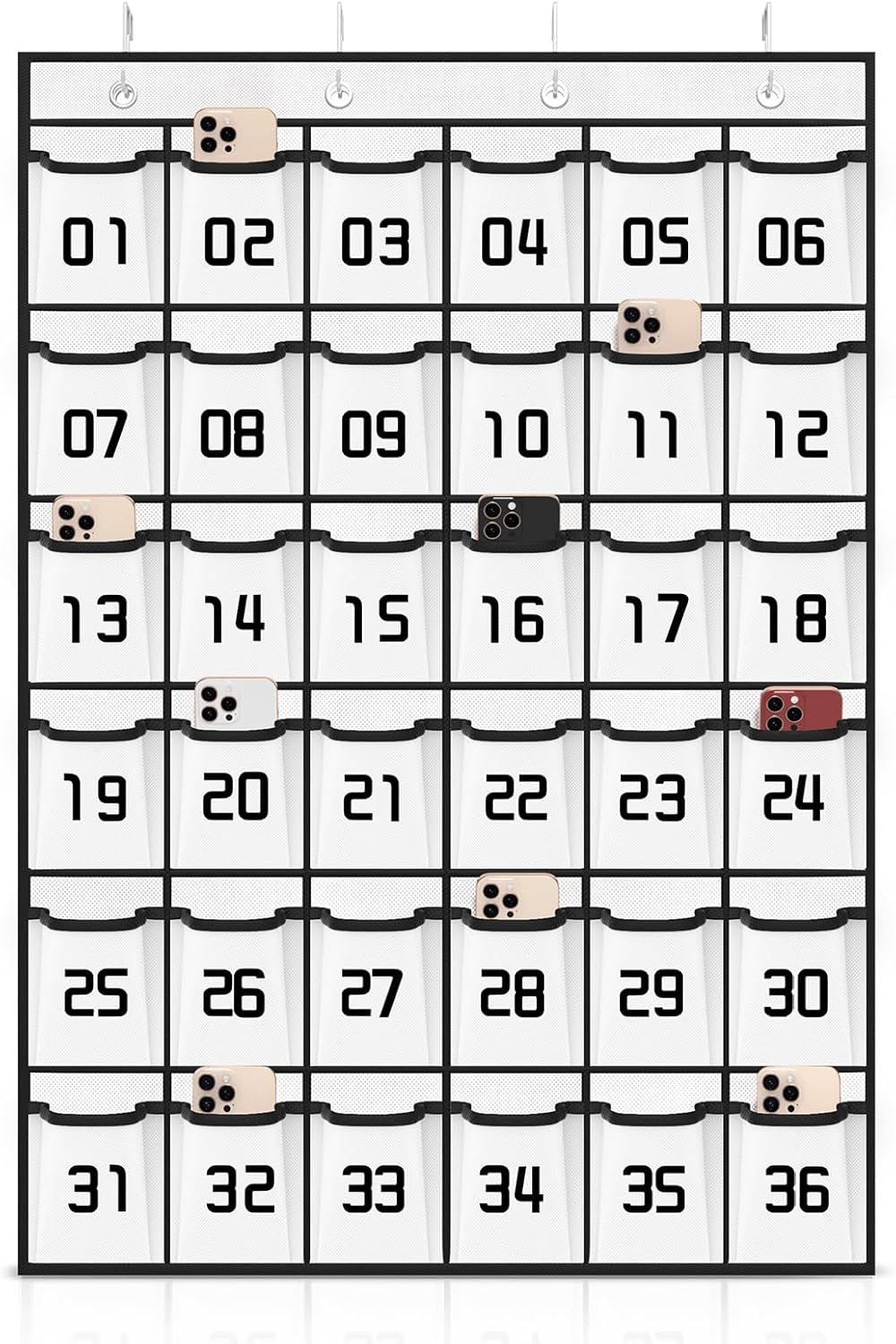
2. Physical: Designate a counter or charging station where ALL phones (yours included) live overnight. Out of sight, out of mind. The simple act of physically removing the phone from the bedroom solves about 80 percent of teen phone problems.
3. Behavioral: When a rule is broken, the consequence happens that day, not “later.” Teens forget faster than you think. Same-day enforcement makes the connection stick.

The Tools That Make a Family Phone Contract Actually Work
The contract is words. These tools turn the words into structure. Skip them and you will be re-fighting the same fights every Tuesday at 9pm.



What Are the Consequences for Breaking a Phone Contract?
The most effective consequences for breaking a phone contract are: same-day enforcement, proportional response, and tied directly to the broken rule. According to the American Academy of Pediatrics, vague consequences (“you’ll lose your phone”) are less effective than specific ones (“you lose social media for a week”).
Sample Consequence Ladder
- First offense (rule broken once): Conversation about why the rule exists. No phone for 24 hours.
- Second offense (same rule, within a month): 1 week without the phone. Re-read contract together.
- Third offense: Phone returns to “training wheels” mode — only calls/texts to family, no apps, for 2 weeks.
- Lying about phone use: Phone goes in the K-Safe for 7 days. Non-negotiable.
- Anything involving safety (sharing nudes, talking to strangers, sextortion): Stop. Talk. NO punishment. Get help. Then we figure out the phone together.
Notice the last one. The biggest mistake parents make is making the consequence for “I told you about something scary” the same as the consequence for “I broke a rule.” Make those different. The second your teen thinks telling you = losing the phone, they stop telling you. (We talk more about this in our screen time limits guide.)
FAQ
At what age should a teen sign a phone contract?
A teen should sign a phone contract before they get their first smartphone, not after. Most parents introduce contracts at age 11-13 when teens get their first phone. The contract should be revisited and updated every 6 months as the teen matures and their phone use evolves.
Are phone contracts legally binding for teens?
No, contracts with minors are not legally binding in the traditional sense. But they do serve as a clear written agreement that helps both parents and teens understand the rules. The value is in the conversation and shared expectations, not legal enforcement.
Should I read my teen’s text messages?
Most child psychologists recommend “transparency over surveillance” — have access to the phone but only check it for specific reasons (concerning behavior, safety issues), not constantly. Random monitoring breaks trust faster than it catches problems. Tell your teen exactly what you will and will not check.
What is a good age to give a teen a smartphone?
The American Academy of Pediatrics and groups like Wait Until 8th recommend waiting until at least 8th grade (age 13-14) for a full smartphone, with a basic call/text-only phone available earlier if needed. The Surgeon General’s 2023 advisory specifically warned about social media for children under 13.
What should I do if my teen breaks the phone contract?
Address it the same day with a specific consequence tied to the broken rule. Talk first to understand what happened, then enforce the consequence calmly. Repeat offenses should escalate predictably. The goal is to teach better phone judgment, not to punish.