This post contains affiliate links. If you buy something through them, I may earn a small commission at no extra cost to you. Full disclosure here.
I have asked exactly one pediatrician — sweaty, in the parking lot of his own clinic — how much screen time my ADHD kid is “really” supposed to have. He looked at his shoes, sighed, and said: “Honestly? The AAP just updated this. It’s not about the number anymore. It’s about what kind, when, and what he can’t do because of it.”
That was the moment my entire screen-time anxiety melted into something useful. Because nobody on page one of Google is telling you THAT. They’re all still citing the “no more than 1-2 hours” rule from a 2016 guideline that the AAP officially walked back in 2026. They literally moved away from rigid time limits to a quality-and-context model — and somehow no one is telling parents.
This is the honest 2026 answer for ADHD kids specifically — what the new guidelines actually say, what real ADHD parents do on r/ADHDparenting (1,000+ comments deep), and the exact tools that turn screen time from a daily war into a vaguely manageable family routine.
TL;DR — How much screen time should a child with ADHD have?
- Under 18 months: Essentially none, except short video calls with family.
- Ages 2-5: Up to 1 hour of high-quality content per day, ideally co-viewed.
- Ages 6-12 with ADHD: 30-60 minutes per day on school days; 1-2 hours weekends. Quality of content matters more than the number.
- The 2026 AAP update: Hard time limits are out — quality, context, conversation, and routines are in.
- What actually works: Visual timer + earned-not-given access + a planned transition activity + screens-out-of-bedroom + 5/10/15 minute warnings.
- The single biggest fix: Cut algorithmic short-form content (YouTube Shorts, TikTok, Minecraft challenge videos). The meltdowns are a content problem more than a duration problem.
How much screen time should a child with ADHD have per day?
Most ADHD specialists now recommend 30 to 60 minutes of recreational screen time per day for elementary-aged ADHD kids on school days, with up to 1-2 hours on weekends — but only when paired with adequate sleep, daily physical activity, and screen-free meals and bedrooms. The number matters less than the structure around it.
This sounds wishy-washy until you read the actual research. A 2025 systematic review in PubMed looked at 14 studies on ADHD kids and screens and found the same conclusion every time: it’s not just how much — it’s whether the screen time is “unstructured” (free-roaming YouTube, algorithm-fed content) versus “structured” (a planned movie, a known game with a stop point).
Translation: 90 minutes of a Pixar movie with the family is worlds different from 90 minutes of YouTube shorts on a tablet alone in a bedroom — even though the clock says the same thing.
What does the AAP say about screen time in 2026?
The American Academy of Pediatrics updated its screen time guidelines in 2026 to move away from strict hour-based limits in favor of a quality-context-conversation model. The key change: instead of “no more than X hours,” parents are encouraged to evaluate what content is being watched, when it’s happening, how the child is reacting, and what it’s replacing.
According to CHOC Children’s Hospital’s 2026 summary, the new framework prioritizes:
- No screens before 18 months (except video calls)
- One hour of high-quality content for ages 2-5, ideally co-viewed
- Screen-free bedrooms and mealtimes at all ages
- Cutoff at least an hour before bedtime
- Routine and predictability over rigid time-counting
This is huge for ADHD families. The old “1 hour MAX” rule meant constant negotiation and the daily failure of going over. The new model lets you build a SYSTEM — and ADHD brains love systems.
Why is screen time worse for ADHD kids?
Screen time hits ADHD kids harder because ADHD brains are already low on dopamine, and screens deliver fast, unpredictable dopamine hits that train the brain to need more, faster. According to ADDitude Magazine, the same dopamine system that makes ADHD kids struggle with boring tasks is the system that gets flooded by likes, wins, and infinite scroll.
What this looks like in real life:
- Meltdowns when screens turn off — not because they’re bad kids, but because the dopamine cliff is real
- Emotional dysregulation lasting 30+ minutes after stopping
- Sleep disruption even from morning or afternoon screen use
- Hyperfocus that looks like deep engagement but is actually closer to compulsion
- Worsened symptoms in school the day after high-screen days
If your kid melts down EVERY time the screen turns off, you’re not parenting wrong. The biology is just stacked against you. The fix isn’t “be stricter” — it’s changing the SYSTEM so transitions don’t require a screen war every time.
How do I end screen time without an ADHD meltdown?
The best way to end screen time without an ADHD meltdown is to use a visual timer, give 15/10/5 minute warnings, and have a planned transition activity ready BEFORE you turn the screen off. The meltdown isn’t about losing the screen — it’s about the abrupt loss of dopamine with nothing to fill the gap.
The exact script that works in my house, lifted directly from r/ADHDparenting threads with thousands of upvotes:
- Set the visual timer when you start. “You have 30 minutes — watch the timer.”
- 15-minute warning. “15 minutes left. What’s your next activity going to be?”
- 10-minute warning. “10 minutes. Go pick your snack and get it ready.”
- 5-minute warning. “5 minutes. Find a good stopping point — end of this round or episode.”
- Timer ends. Hand them the snack + next activity immediately. Don’t leave the post-screen vacuum empty.
The other huge fix is using a “half-step dopamine” transition activity — something that’s engaging but quieter. Legos, a comic book, an outside activity, or audio stories on a screen-free player like the Yoto Mini below. Suddenly there’s SOMETHING to do that isn’t boredom, and the meltdown deflates.
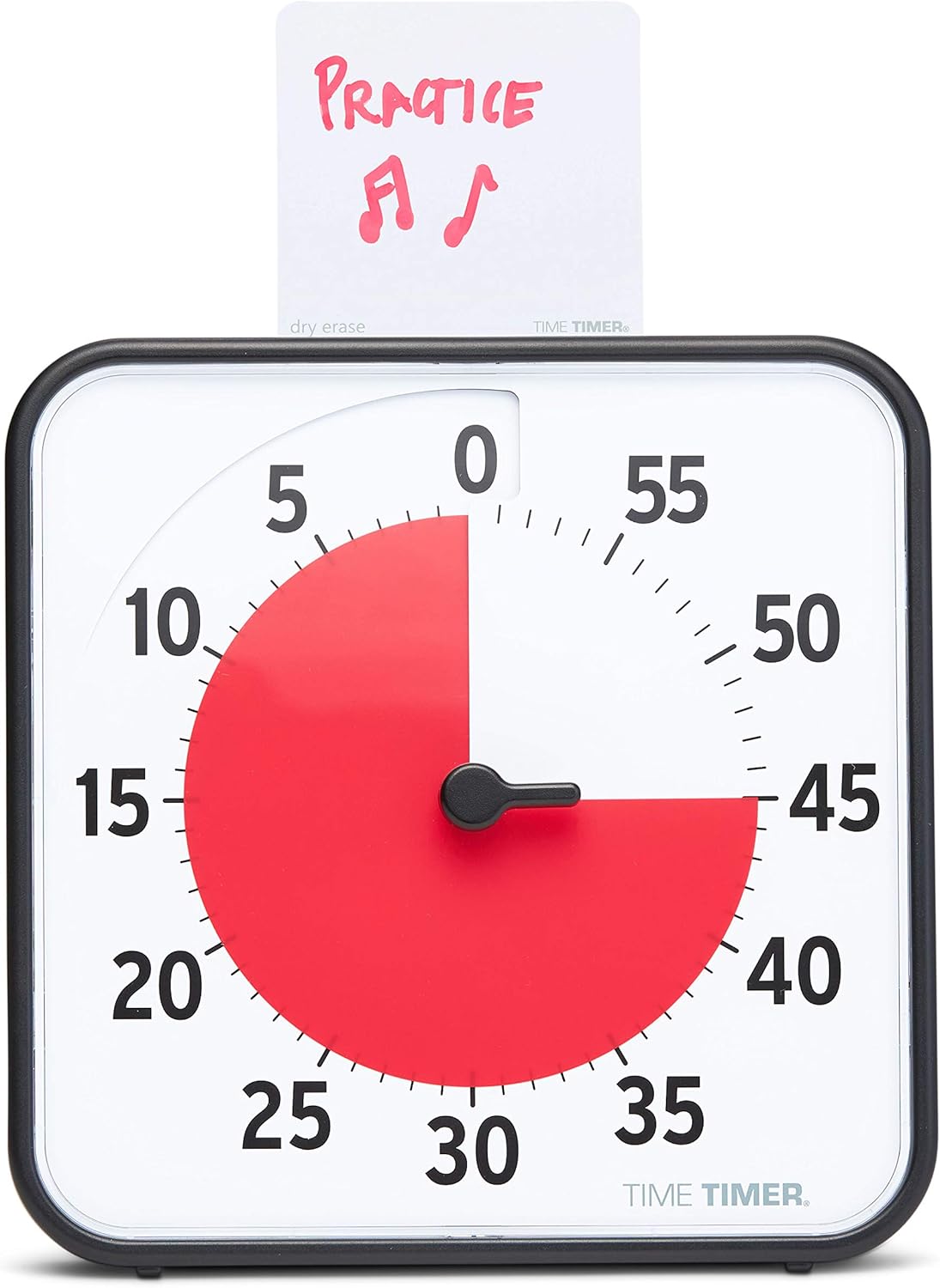
The iconic red-disc timer that Wirecutter just named a 2026 best pick — and that every ADHD parenting therapist will recommend within five minutes of meeting you. The shrinking red disc gives your kid an actual visual of “time left” instead of an abstract number. The 8-inch is perfect for a kid’s desk or coffee table next to the couch.
Approx. $28 on Amazon
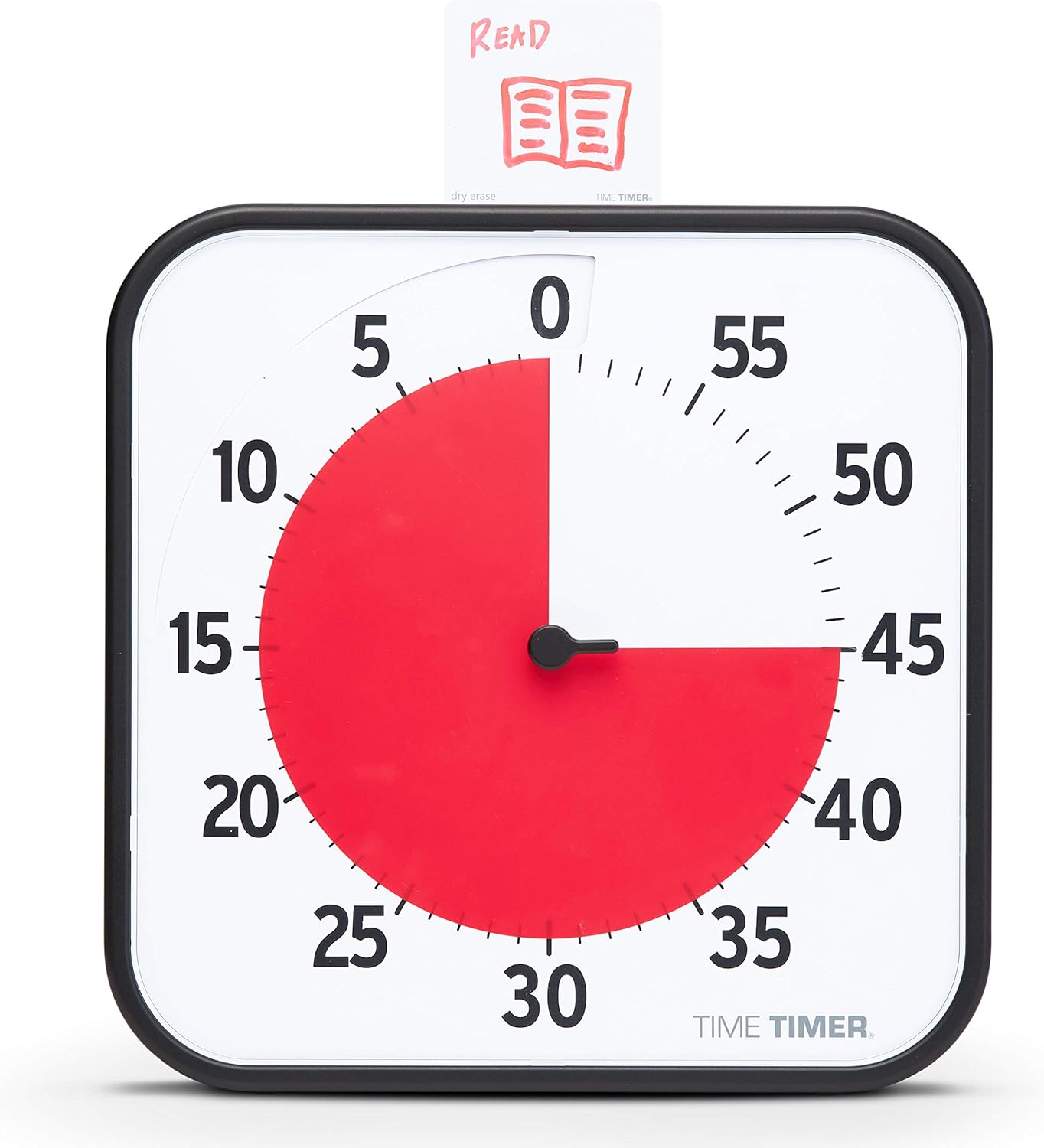
Same magic, bigger surface area. The 12-inch is what we ended up using because the entire family can see it from across the living room — including the kid who is “definitely paying attention, Mom” while playing Minecraft. Worth the extra few dollars if your kid does screen time in a shared space.
Approx. $32 on Amazon
What products actually help with ADHD screen time?
The products that actually help with ADHD screen time are visual timers (for time blindness), smart speakers with built-in screen-time announcements, screen-free audio alternatives, and visual schedule charts that show “what comes before screen time”. None of these are magic, but they remove YOU from the daily war.
1. A visual timer (the single highest-ROI purchase)
ADHD kids experience time blindness — they literally cannot feel time passing. According to Time Timer’s 2026 Wirecutter mention, the disappearing-color disc gives a concrete visual that something is being lost in real time, which their brains can actually process. Buy this before anything else.
2. Alexa as the “bad guy” (game-changer)
“Alexa, set a screen time timer for 30 minutes.” When it goes off, SHE tells them screens are done. Not you. The neutral robotic voice removes the parent-child negotiation entirely — and ADHD kids who would scream at me for ending screens will calmly walk away when Alexa says it. This is the single weirdest hack and it consistently works in my house.

This is the Reddit cheat code nobody talks about loudly enough: Alexa is the “bad guy” who ends screen time, not you. “Alexa, set a screen time timer for 30 minutes.” When it goes off, she’s the one telling them they’re done — and weirdly, kids accept it from a robot way better than from a tired mom. Owl edition for kids = parental controls baked in.
Approx. $60 on Amazon
3. A screen-free audio player (the actual replacement)
If you take screens away with nothing to fill the gap, you’ve just made your day harder. The Yoto Mini changed our house. It plays stories, music, and podcasts via physical cards you insert — no screen, no infinite scroll, no algorithm. My ADHD kid will quietly listen for an hour. It’s the closest thing to a screen-free dopamine source we’ve found.
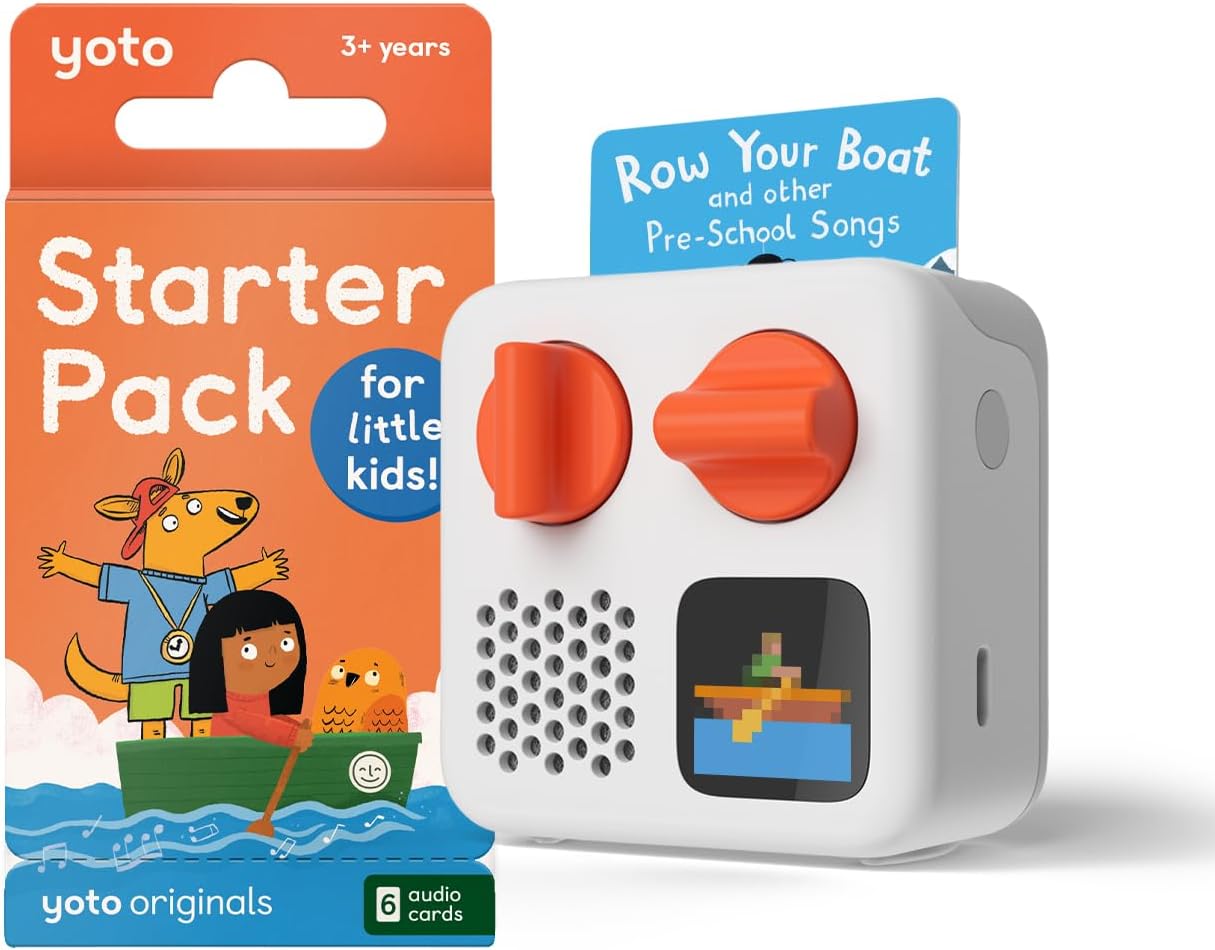
The actual “screen replacement” half of this whole equation. Yoto plays stories, music, and podcasts via physical cards — no screen, no scrolling, no algorithm, no dopamine cliff. My ADHD kid will sit and listen to Yoto stories quietly for an entire hour the same way he used to inhale YouTube shorts. Best $95 I’ve spent on screen reduction by a mile.
Approx. $95 on Amazon
4. A visual schedule for “before screens” tasks
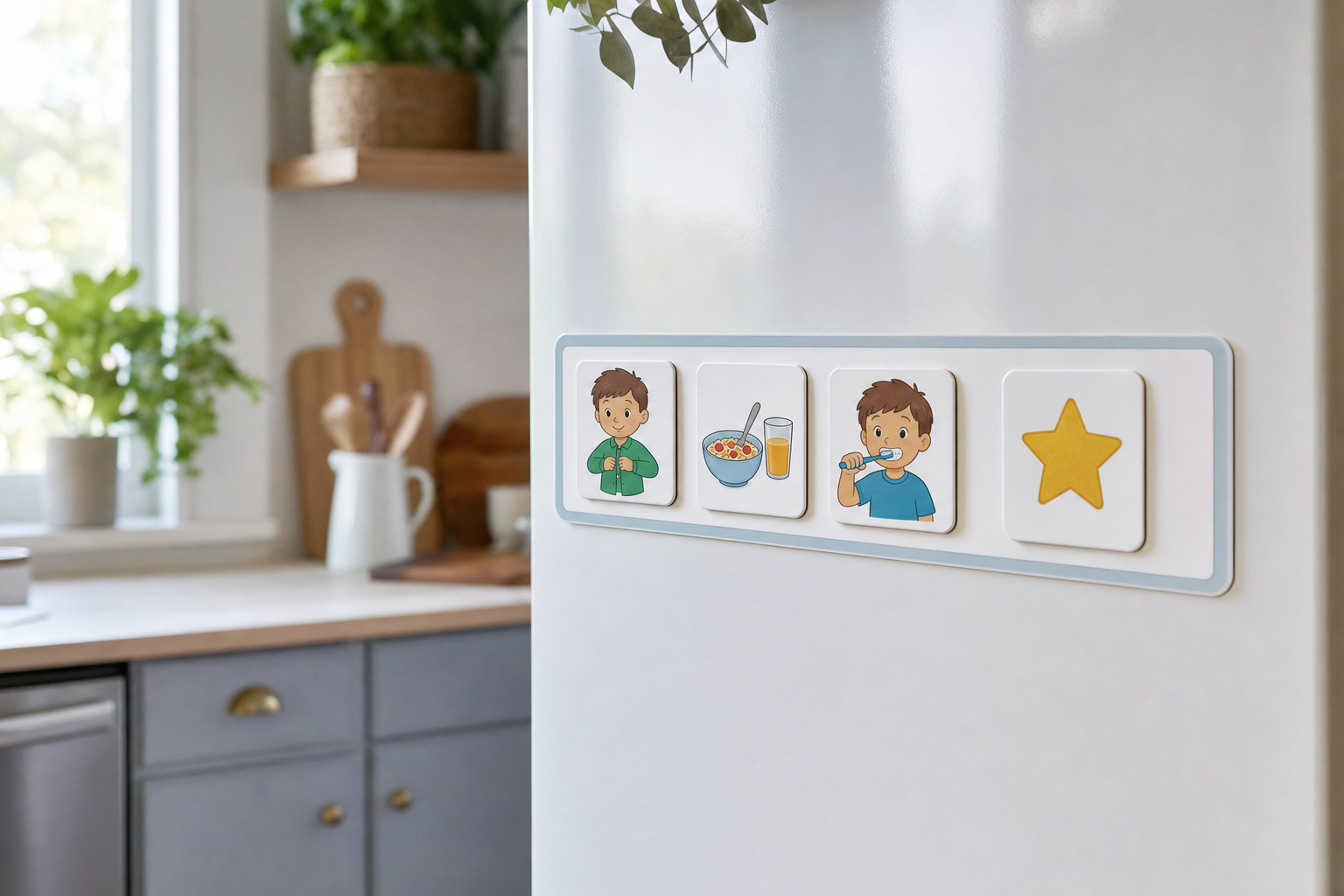
The “earn screen time by finishing the routine” approach is the #1 most upvoted suggestion on r/ADHDparenting, and a magnetic visual schedule is what makes it actually work. Kid can see the path to screen time, which removes 80% of the negotiation and the “but can I just have it now” loop.
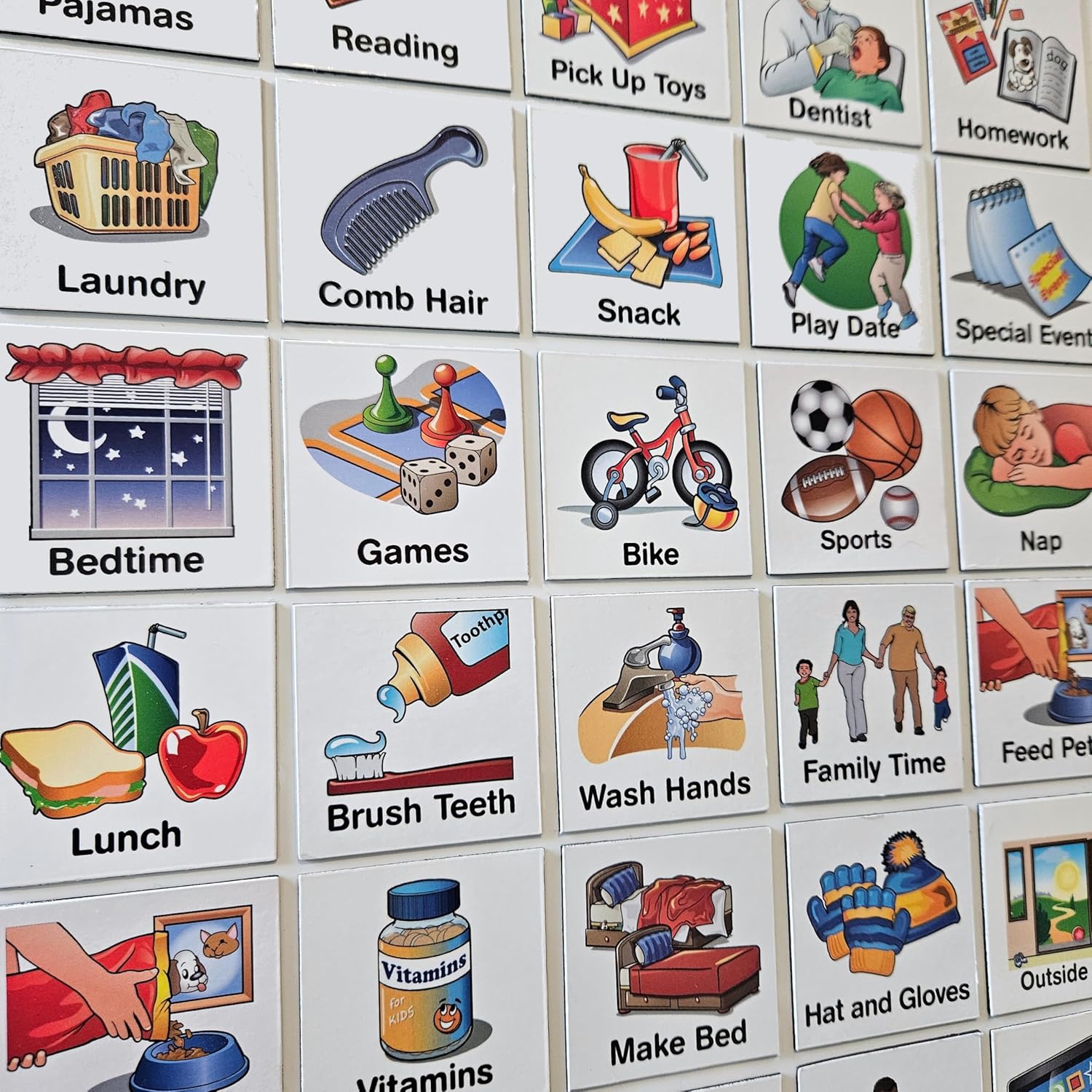
The “what they have to do BEFORE screens” visual that ended the “but can I just watch ONE more” loop in this house. Magnetic, dishwasher-survivable, and reorderable — kid can SEE the path to screen time, which kills 80% of the negotiation. 1,140 reviews, used by teachers and ADHD therapists everywhere.
Approx. $24 on Amazon
What types of screen content are worst for ADHD kids?
The screen content that’s worst for ADHD kids is short-form algorithmic content — YouTube Shorts, TikTok, Instagram Reels, and “Minecraft challenge” YouTube videos — because the rapid-fire stimulation and unpredictable rewards train the brain to need ever-shorter cycles of dopamine. According to Understood.org, this is the single biggest content-quality factor for ADHD kids.
From worst to best for ADHD brains:
- ❌ YouTube Shorts, TikTok, Reels — the absolute worst
- ❌ Algorithm-fed YouTube — autoplay is the trap
- ⚠️ Fast-paced cartoons (especially anything with quick cuts)
- ⚠️ Multiplayer competitive games with no clear stopping point
- ✅ Single full-length movies or shows with a defined end
- ✅ Slower-paced classic content (Sesame Street, Mr. Rogers, Bluey)
- ✅ Single-player games with clear levels as stopping points
- ✅ Educational content with you co-viewing
If you change ONE thing about your ADHD kid’s screen time today, kill the shorts. Just kill them. Block YouTube Shorts in Family Link, never enable TikTok, and watch what happens in a week.
What should ADHD kids do instead of screen time?
The best replacements for screen time with ADHD kids are activities that provide some dopamine but not screen-level dopamine — outdoor play, Lego builds, sensory play, audio stories, board games, and physical movement. The point isn’t to make their life boring — it’s to give their brain something else to chase.
Specifically what works in this house (and on r/ADHDparenting):
- 20 minutes outside before screens (every single morning)
- Audio stories during quiet time via Yoto, no screen needed
- Open-ended Lego or magnatile play
- Sensory bins (we did a whole post on taste-safe sensory bins)
- Cooking or baking with you
- Outdoor chores that involve movement
- Toys that actually keep kids busy — ranked by independent-play minutes here

And honestly, if your ADHD-meltdown plan needs more work in general, our step-by-step meltdown guide covers what to do when the timer-and-transition combo isn’t enough.
Frequently Asked Questions
How much screen time is too much for a child with ADHD?
More than 2 hours per day of recreational screen time on school days — especially of short-form algorithmic content like YouTube Shorts or TikTok — is generally considered too much for ADHD kids and is consistently linked to worse symptoms in research. The signs you’ve gone over: increased meltdowns when screens end, sleep disruption, worse next-day focus at school, and loss of interest in non-screen activities.
Does screen time cause ADHD in kids?
Screen time does not cause ADHD — ADHD is a neurodevelopmental condition — but excessive screen time can worsen existing ADHD symptoms. A large 2023 review found little evidence that screens cause ADHD, but plenty of evidence that screens make symptoms worse for kids who already have ADHD.
Should I let my ADHD child play video games?
Video games can be fine for ADHD kids if they’re single-player with clear stopping points (level-based games, story-driven games) and used in time-limited sessions with a visual timer. Avoid open-ended multiplayer games with no natural endpoint, and absolutely avoid pairing gaming with YouTube videos about gaming — that’s the dopamine doom-loop combination.
What time should ADHD kids stop using screens before bed?
ADHD kids should stop using screens at least 60 minutes before bedtime, per Children’s Hospital Los Angeles guidelines, because blue light and dopamine spikes both disrupt the already-fragile ADHD sleep cycle. Bedrooms should be screen-free at all ages, and devices should physically leave the room overnight.
How do I deal with my ADHD child wanting screens constantly?
Build a structured “earn it” system instead of fighting the constant requests in real time — use a magnetic visual schedule showing the tasks that come before screens, set fixed screen-time windows in the day (e.g., “no screens between 9 AM and 5 PM”), and have Alexa or a timer be the “bad guy” who ends the session. The goal isn’t to win the negotiation; it’s to eliminate it.
This post is for general information and is not medical advice. If you have concerns about your child’s screen use or ADHD symptoms, please consult your pediatrician or a licensed mental health professional. Full disclaimer here.