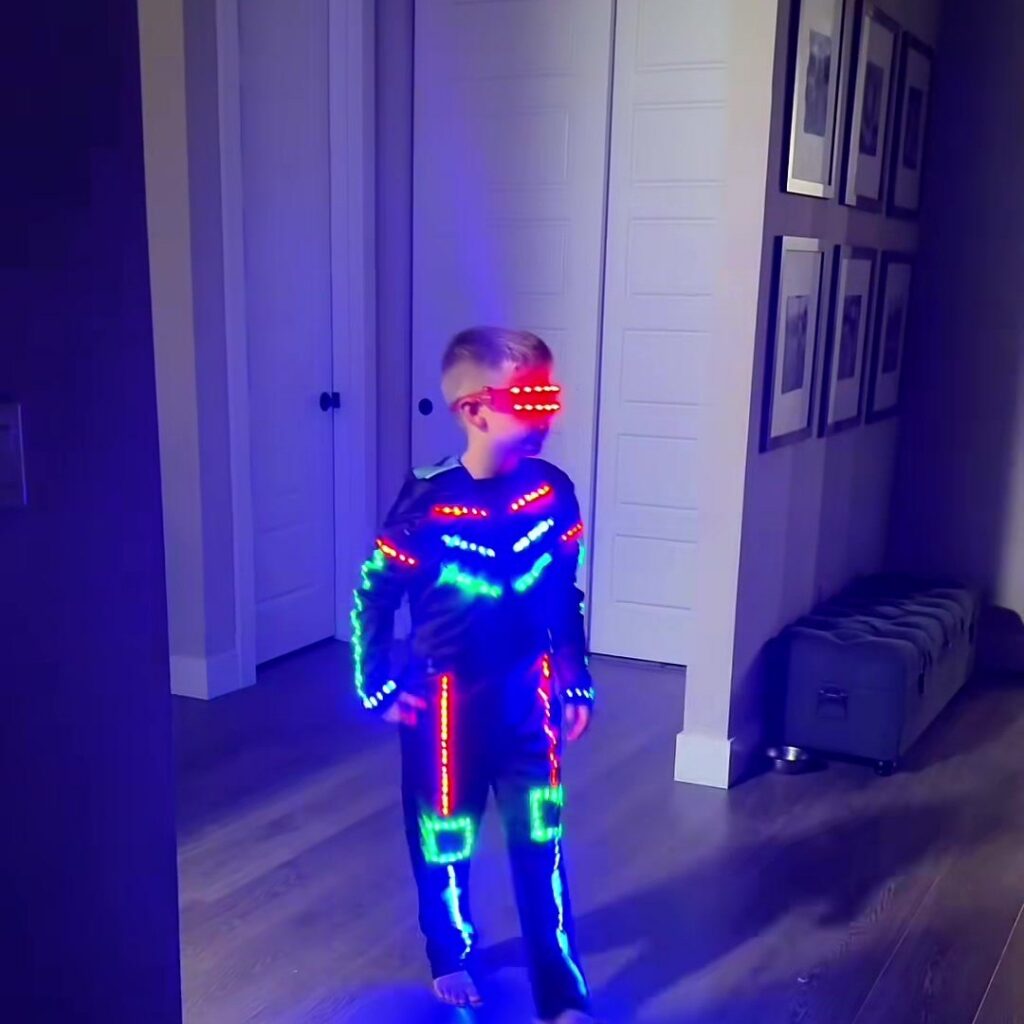
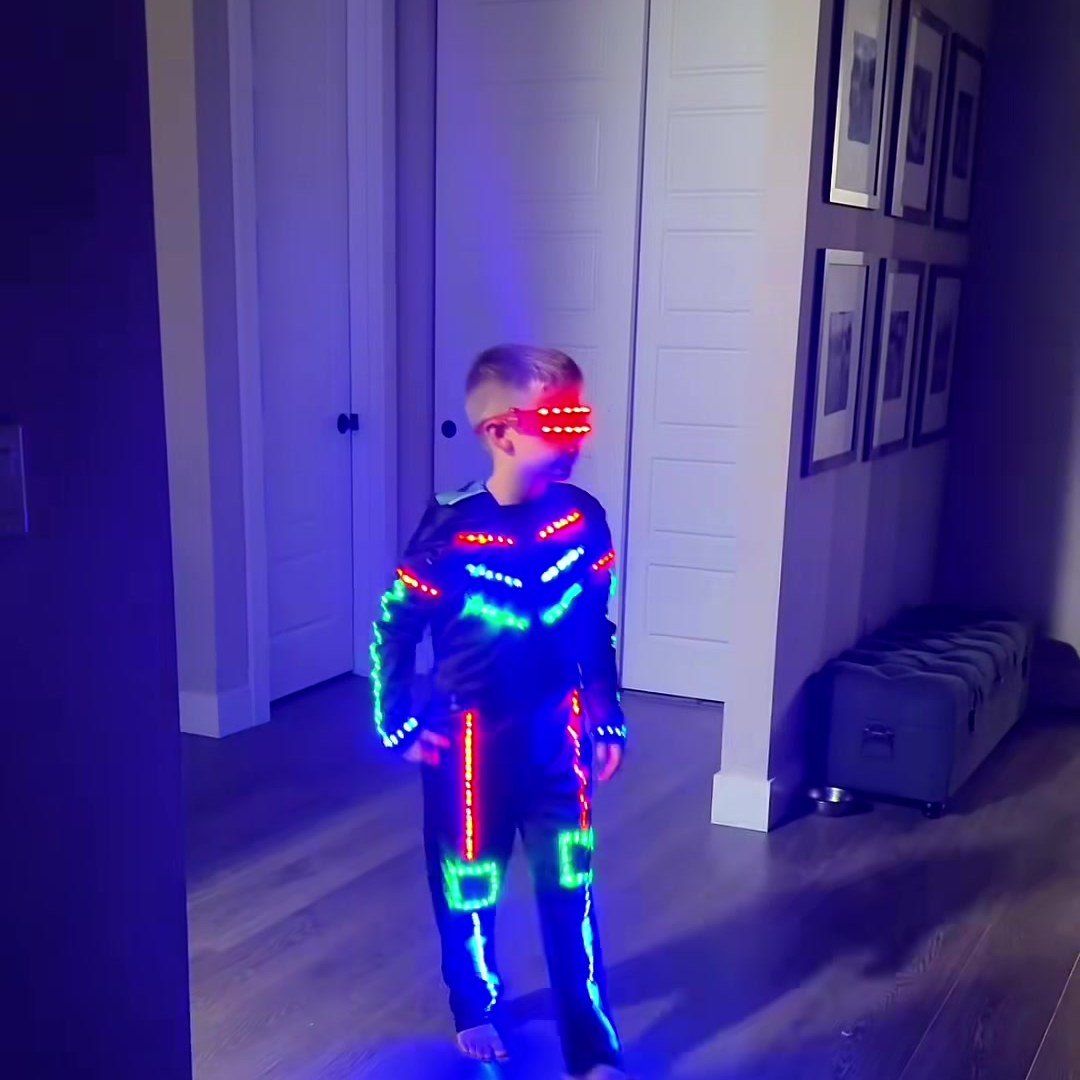
Every year there is a costume. Every year there is a kid who will not put it on.
If your kid refuses to wear a Halloween costume, the short answer is that it is almost always sensory discomfort, pressure, or both at once. The fix is not a better costume. It is a smaller ask. Build the costume out of clothes they already wear, let them opt in late, and decide ahead of time that a kid in a hoodie holding a candy bucket is doing Halloween correctly.
Here is how that actually plays out, and what to do on the night when the ears come off in the driveway.
Why does my kid refuse to wear a Halloween costume?
Look at what a costume is made of. Stiff polyester. Seams in strange places. Elastic at the neck and wrists. A tag sewn right between the shoulder blades. A mask that changes how air feels on your face. We hand kids the single scratchiest garment they will touch all year and ask them to be delighted about it.
Understood.org makes the point plainly: when a child refuses certain clothes, it usually comes from real sensory discomfort rather than stubbornness, and the common triggers are itchy labels, heavy fabrics, and hardware like zippers and buttons. Their guidance is to figure out which specific feature is the problem, then stop fighting that feature.
So before you assume it is about Halloween, check the fabric. A kid who wears the same four shirts in rotation all year is telling you something, and the costume is not going to be the exception.
The first year the costume came off, it was sensory. It didn’t feel good. It was scratchy. So we tried comfortable clothes underneath, and when that wasn’t enough, we limited how long he had to wear it.
Is it the costume, or is it the pressure?
Here is the test. If your kid will happily wear a cape on a random Tuesday but will not wear one on October 31, it is not the cape.
For kids with a demand avoidant profile, the pressure is the whole problem. PDA North America describes demands as cumulative, and notes that avoidance is involuntary. It is a can’t, not a won’t. Their guidance also flags something most of us get wrong: praise and rewards can land as demands too. Their overview of PDA and support approaches is worth ten minutes if this is new to you.
Now count the demands stacked on one costume. Grandma wants a photo. There is a family theme. Someone spent money. The neighbors will be out. Your kid can feel every bit of that, and the costume is carrying all of it.
Take the weight off the object and it often stops being the enemy. If you want the language for that, I keep a longer list in my post on PDA parenting scripts and what to actually say.
What Halloween costumes work for sensory sensitive kids?
One rule covers most of it: start with clothes your kid already wears, then add exactly one signal.
- All black plus one accessory. Cat, bat, spider, shadow. The accessory clips on and comes off in a second.
- Black hoodie plus white tape. Skeleton bones in painter’s tape. No new fabric touches their skin.
- A shirt they already own, reframed. Red shirt and jeans is a dozen characters if you say it with confidence.
- Pajamas. Genuinely a costume. Nobody at the door is checking.
- A character t-shirt. The character is printed on, not built around them.
- Accessory only. A hat, ears, a badge, one glove. Enough to count, easy to abandon.
- A single face paint mark instead of a full face or a mask. A whisker, a scar, a dot on the nose.
The American Academy of Pediatrics has a few costume rules worth keeping regardless of sensory stuff: costumes short enough not to trip on, hats that cannot slide over the eyes, non toxic makeup instead of masks that block vision, a patch test on the skin first, and something reflective if you will be out after dark. Their full list is here. Conveniently, skipping the mask is both the safer call and the one most sensory kids want anyway.
How do I get my kid to try a costume without a fight?
Stop asking. Start narrating.
Declarative language gives a kid information without handing them a demand to push against. It sounds like this:
- “The cat ears are on the counter if anyone wants them.”
- “I’m putting mine on. No rush.”
- “Some kids wear a costume. Some kids wear regular clothes and carry the bucket.”
- “This one is scratchy. I wouldn’t wear it either.”
Notice what is missing. No questions. No countdown. No “just try it for one second.” A question is still a demand with a nicer face on it.
Then take the audience away. Let the first try happen on a normal afternoon in the middle of October with nowhere to be, which is also what Understood recommends in their rundown of Halloween challenges for kids with ADHD: test the costume early and layer it over comfortable clothes. No photos on the first try. Photos turn a try into a performance.
And say the out loud, before anyone needs it. “You can take it off whenever.” A kid who knows they can quit is much more likely to start. If things escalate anyway, my step by step guide to ADHD meltdowns covers the part after the no.
What if my kid wants to skip trick or treating?
Then skip it. There are more versions of Halloween than the one on the block.
- Hand out candy instead. Your kid controls every interaction, from your own doorway, and it is a real job.
- One house. Pick the neighbor you like. Done is done.
- Walk without knocking. Look at the decorations, skip the doors.
- Drive around and look at lights with the candy already in the car.
- A daytime event at a mall, library, or park. Quieter, brighter, shorter, and Understood lists these as good low key alternatives.
- Costume contest at home with two participants and a made up trophy.
If the candy itself is the tricky part in your house, that is a whole separate thing, and I wrote about it in PDA food refusal and what helps at mealtimes.
What do I do if the costume comes off ten minutes in?
Put it in the bag you brought for exactly this and keep walking.
Decide before you leave the house that the costume is optional for the whole night. Then you are not renegotiating on a sidewalk in the dark with a kid who is already at capacity. You are just a person holding a cape.
Halloween is not a test your kid passes or fails. Nobody is grading the driveway.
Do we have to do Halloween at all?
No.
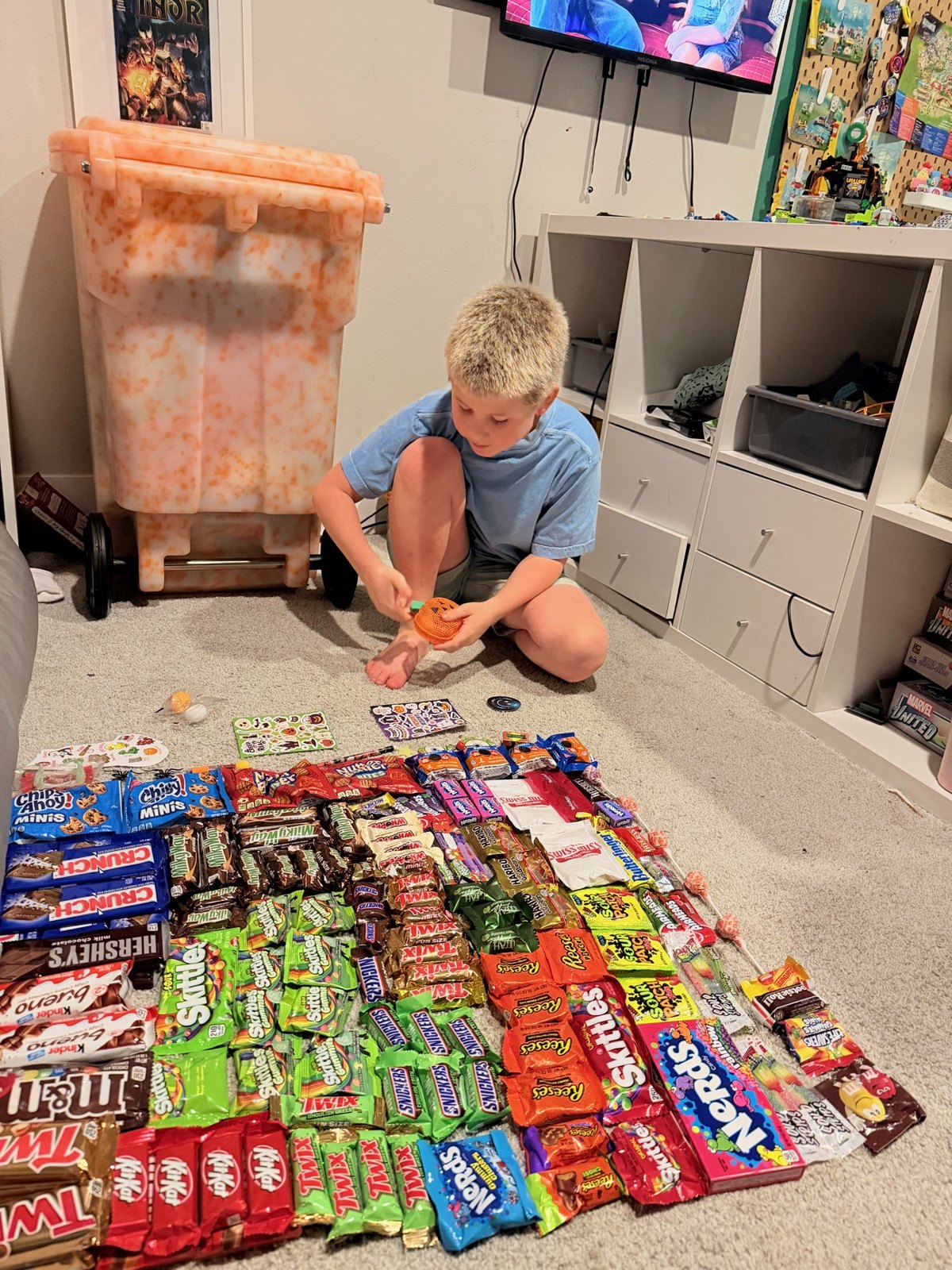
You will pay for a forced Halloween the next day, and probably the day after that. A quiet night with a movie and a bowl of the good candy is not a failure of parenting. It is just a different October 31.
My honest take? It’s totally fine. Any piece of a costume they’ll wear is totally fine. Nothing at all is also totally fine.
One note: this is a parenting post, not medical advice. If clothing refusal is a daily fight and not a once a year Halloween thing, it is worth raising with your pediatrician or an occupational therapist.
What is worth having on hand
Short list, and only the things that do real work:
- A soft tagless base layer to go under anything scratchy
- Reflective tape or a clip on light, since most of the good costume options are black
- Clip on ears or a headband in a material your kid already tolerates
- Face paint crayons for the one mark version
- Painter’s tape for the skeleton hoodie
- A soft drawstring bag instead of a hard bucket that gets heavy
Frequently asked questions
Why do some kids refuse a Halloween costume?
It’s almost always sensory discomfort, pressure, or both. Costumes are often stiff and scratchy, with tags, elastic, and masks, and Halloween can also stack a lot of demands onto one outfit.
What costumes work better for sensory-sensitive kids?
Start with clothes they already wear, then add one signal: all black plus a clip-on accessory, a black hoodie with painter’s-tape skeleton bones, pajamas, a character t-shirt, or a single face-paint mark instead of a mask.
What if my kid wants to skip trick-or-treating, or takes the costume off early?
Skipping is fine, and so is a quieter version of the night, like handing out candy, visiting one house, or staying in. If the costume comes off, put it in the bag you brought and keep going. Decide ahead of time that the costume is optional.
Do we have to do Halloween at all?
No. A quiet night with a movie and candy is just a different October 31. Any piece of a costume a kid will wear is fine, and nothing at all is also fine.
Want the low demand scripts in one place? I send one email a week with the words that actually work, from someone who is also still figuring it out. No spam, and you can leave whenever.
If you get one thing out of this, make it the sentence you say out loud before you leave the house: the costume is optional. Say it to your kid. Say it to yourself. The night gets easier from there.
More on kid refuses to wear a Halloween costume
If you want more on kid refuses to wear a Halloween costume, start with How to Throw a 90s-Style LEGO Birthday Party at Home and DIY Birthday Photo Backdrop for Kids’ Parties.