
This post contains affiliate links. If you buy something through them, I may earn a small commission at no extra cost to you. Full disclosure here.
If I could go back in time and grab my pre-kids self by the shoulders, I would not warn her about sleep deprivation. I would not lecture her about the diapers, the laundry, the relentless logistics. She would figure those out — she’s scrappy. I would sit her down and tell her this: “You and your partner are about to become two completely different people. The conversations you don’t have right now, you will have at 2 a.m. covered in someone else’s body fluids. Have them now.”
The Gottman Institute’s longitudinal study of new parents found that 67% of couples experience a “significant drop” in relationship satisfaction within the first three years of having a baby. Two-thirds. That number lived rent-free in my head while I was writing this, because nobody told us. Nobody told ME.
So here is the list nobody hands new parents — the 7 specific conversations every couple should have before having kids, plus the actual books and tools that get you there. Written by someone who learned all of it the hard way, while crying into a postpartum hairloss bun in a kitchen that smelled like spit-up.

TL;DR — The 7 conversations to have BEFORE having kids:
- The mental load — who keeps the running list of everything?
- The night shift — exactly how are you splitting it?
- Maternity / paternity leave & re-entry — who pauses career, for how long?
- In-laws & grandparents — boundaries before they arrive uninvited
- Money — daycare, savings, who pays for what when one income drops
- Date nights & sex — non-negotiable, not “when we feel like it”
- The “if it gets really hard” plan — therapy threshold + repair rituals
The Gottmans say 67% of couples report a major drop in relationship satisfaction in the first 3 years after a baby. These 7 conversations are the inoculation.
What should I talk about with my partner before having a baby?
Before having a baby, you should talk about the mental load, night-wake schedules, parental leave, money, in-laws, date nights, and your plan for when (not if) the relationship gets hard. The biggest mistake new parents make is assuming “we’ll figure it out as it comes.” You won’t — you’ll fall back on whatever each of you absorbed from your own parents, and that’s where the real conflict lives.
First Things First compiled a similar list from couples therapists and the overlap is striking: every expert lists the same six or seven topics. They’re the same ones I list below. Real ADHD-mom version though: not abstract feelings, but the specific operational questions that show up at 3 a.m.
The 7 conversations I wish we’d had before kids
1. The mental load — who keeps the list?
This is the #1 thing that destroys post-baby marriages, full stop. The “mental load” is the invisible work of remembering — what shoe size your kid wears, when the pediatrician appointment is, that we’re out of formula, that the dog needs heartworm, that Tuesday is library day. Most couples split visible work somewhat evenly. Almost no couples split the mental load evenly, and one partner (usually mom) ends up “carrying the project plan for the household” alone.
The conversation to have now:
- “How are we going to track everything? A shared calendar? A whiteboard? An app?”
- “What categories of mental load are you going to OWN — not help with, OWN?”
- “How do we redistribute when one of us gets overloaded without it turning into a fight?”
The book that fixed this in our marriage is Fair Play by Eve Rodsky. It makes the invisible visible.
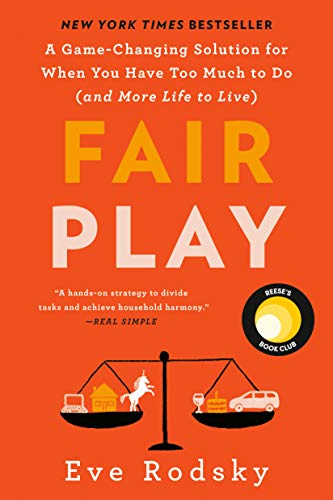
The Reese’s Book Club pick that made every mom in America hand a copy to her husband. It introduces the idea that every household task has three parts — conception, planning, and execution — and that “helping” isn’t the same as owning a task. This book changed our marriage. Genuinely.
Approx. $20 on Amazon
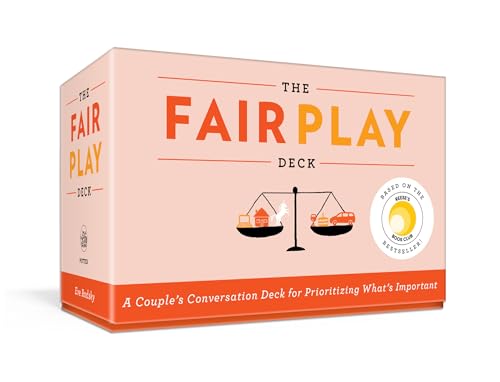
The actual physical card deck that goes with the book — 100 cards representing every invisible household task. You spread them out on the floor and divide them. It’s a board game but for “who books the pediatrician appointments.” Sounds silly. Works.
Approx. $22 on Amazon
2. The night shift — exactly how are you splitting it?
“We’ll just take turns” is not a plan. It’s a fantasy. According to the most-upvoted thread on r/beyondthebump, sleep-deprivation resentment is the #1 cited reason couples spiral in the first year. You need to decide BEFORE the baby comes:
- Bottle-feeding family: alternate full nights, or split shifts (one parent 8 p.m.-2 a.m., other 2 a.m.-8 a.m.)?
- Breastfeeding family: who handles wake-ups requiring feeding vs everything else (diaper, soothing, etc.)?
- Sick nights: is there a “designated sick parent” or do you tag-team?
- Weekend mornings: who gets to sleep in on Saturday vs Sunday? (Trust me — this is a real thing.)
Decide before the baby gets here, when nobody is exhausted, and ideally write it down somewhere you can both find at 4 a.m.

3. Maternity, paternity, and the “re-entry” plan
You need a clear plan for who pauses their career, for how long, and what re-entry looks like. According to the U.S. Bureau of Labor Statistics, women’s labor force participation drops by roughly 18 percentage points after having a child while men’s barely shifts. That gap is a marriage-conflict landmine if it’s not pre-discussed.
What we wish we’d talked about:
- Is one of us pausing or reducing work? For how long?
- If yes, how does that change household division of labor (because it WILL)?
- What’s the re-entry timeline — return to full work, part-time, freelance?
- How does our money work when one income is paused?
- What does career-reentry support look like — networking, training, childcare ramp-up?
4. In-laws and grandparents — pre-set the boundaries
The fastest way to start fighting with your partner after a baby arrives is to be surprised by what their family thinks they have a right to. Have the conversation before grandma is loading the diaper bag with opinions:
- Who can come over unannounced in the first 3 months? (Answer: ideally nobody.)
- Who watches the baby when — and what are the non-negotiable rules?
- How are religious / cultural decisions about the baby handled?
- What does “visiting from out of town” look like? Hotel vs guest room?
- Who in each family is allowed to give unsolicited parenting advice? (Answer: also nobody.)
The trick is presenting these as a couple to BOTH families, not letting each partner be alone with their own parents. United front, every time.
5. Money — for real this time
Most couples have talked about money in the abstract. Almost none have talked about it specifically post-kids, where one income may drop, childcare alone runs $1,200-$2,400/month per kid in 2026, and “small purchases” become a constant negotiation.
The pre-kids money convo:
- What’s our childcare plan — daycare, nanny, family, stay-at-home parent?
- What’s the realistic monthly cost of all of the above in our area?
- If one income drops, what gets cut from our budget?
- What’s our spending threshold for “discuss before buying”? ($50? $100? $500?)
- Are we keeping money separate, joint, or hybrid?
- Do we have 3-6 months of emergency savings before the baby arrives?
6. Date nights and sex — schedule them, don’t hope
According to the Gottman Institute, couples who maintain a weekly “ritual of connection” — even just 20 minutes — report dramatically higher relationship satisfaction over time than couples who “wait until they feel like it.” You will not feel like it. Schedule it anyway.
Specifically:
- Pick a weekly recurring time (we do Friday after bedtime) and put it on the calendar.
- Decide on a monthly out-of-the-house date — find your sitter situation BEFORE the baby comes.
- Talk about sex specifically: postpartum timeline, mismatched libidos, how you’ll handle “no” without resentment.
- The book Eight Dates is literally eight structured date nights with the conversations the Gottmans found most predictive of long-term success.
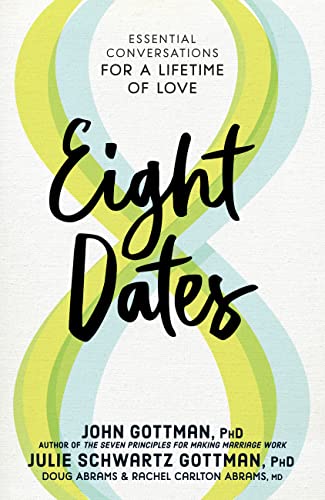
Eight specific date nights with structured conversations the Gottmans designed based on the topics couples don’t talk about until it’s too late: trust, money, sex, work, family, play, and the dreams behind the dreams. We did one a month. Game-changer for actual date night.
Approx. $27 on Amazon

7. The “if it gets really hard” plan
This is the one nobody has. Have it. The conversation isn’t “we won’t need this” — it’s “if we get to a hard place, here’s the protocol.”
- When do we agree it’s time for couples therapy? (Pre-decide a threshold — three weeks of bad sleep + zero non-logistics conversation, etc.)
- What’s our “repair ritual” — the specific gesture or words we use when we know we’ve hurt each other?
- How do we handle “I’m emotionally done for the day” without it becoming abandonment?
- Who in our life is allowed to know when we’re struggling? (Sometimes it’s NOBODY — and that has to be okay too.)
For deeper systems on staying connected after kids, our post on staying connected with your partner when you have young kids goes deeper on actual rituals that work in the chaos.
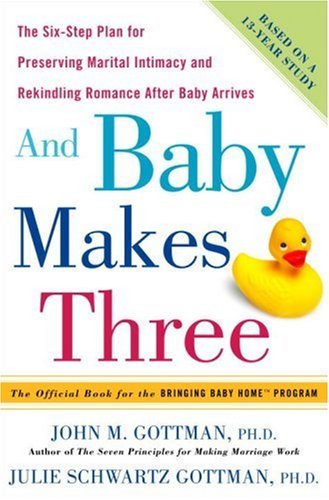
The Gottman book specifically about the transition to parenthood. Based on their longitudinal study of 130 couples — what predicts marriages that survive vs collapse in the first 3 years of a baby. If you only read ONE book on this list before having kids, this is the one.
Approx. $15 on Amazon
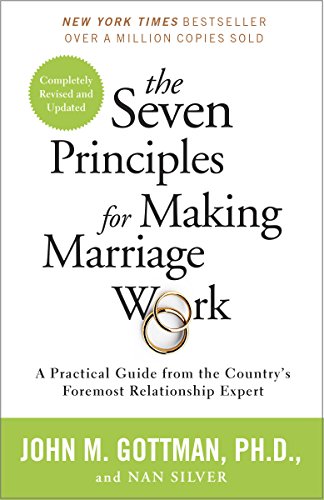
The Gottman classic. 15,000+ reviews, 4.7 stars. Based on 40 years of actual research watching couples in a lab — they can predict divorce with 90%+ accuracy. The “Four Horsemen” framework alone (criticism, contempt, defensiveness, stonewalling) will rewire how you fight. Required reading.
Approx. $20 on Amazon
What is the hardest part about having kids for couples?
The hardest part about having kids for couples is the slow, invisible erosion of “us” time as logistics swallow the relationship. According to the Gottmans, 67% of couples experience a major drop in relationship satisfaction in the first 3 years of having a baby — and the drop isn’t caused by one big fight. It’s caused by hundreds of tiny moments where logistics replaced connection.
What it looks like in real life:
- Every conversation becomes a status meeting (“Did you pack the diaper bag?” “Pediatrician moved to 3 p.m.”)
- You stop asking about each other’s inner lives because there’s no oxygen for it
- Sex disappears and nobody talks about it
- Resentment builds in the gap between what was promised about “we’ll do this together” and what’s actually happening
- You realize you haven’t laughed together in three weeks
This is normal. It’s also fixable — but only if you both NAME it. Which is why the 7 conversations above need to happen before you’re in the dark forest, not while you’re in it.
How do you keep your marriage strong after having a baby?
You keep your marriage strong after having a baby by intentionally building in small daily rituals of connection, dividing the mental load explicitly (not just visible tasks), having weekly child-free conversation time, and getting into couples therapy at the FIRST sign of disconnection — not as a last resort. According to Gottman’s research, the magic ratio is 5:1 — five positive interactions for every negative one. After kids, you have to be intentional about manufacturing the positive ones.
Specific things that have worked in our marriage:
- 6-second kiss every morning before either of us touches a phone
- “How was your inside?” question once a day (not “how was your day,” which gets a logistical answer)
- Friday “we made it” check-in on the couch after bedtime, even 20 minutes
- Monthly date night that leaves the house, no negotiating
- Annual “state of the marriage” weekend away (we just started this and it changed everything)

Should we go to couples therapy before having a baby?
Yes — premarital or pre-baby couples therapy is one of the highest-ROI investments you can make in your relationship, and it’s significantly cheaper than the post-crisis version. Even 4-6 sessions to pressure-test the 7 conversations above is enormously valuable. Psychology Today notes that couples who did premarital or pre-baby counseling report 30% higher marital satisfaction five years out.
If a full therapist isn’t feasible, the Gottman books and the Fair Play system together are genuinely a 70-80% solution. Read them together. Out loud. With breaks for arguing. It’s its own therapy.
And if you’re reading this and your relationship is already in survival mode, our co-parenting guide covers the operational side when things have gotten really hard.
Frequently Asked Questions
Does having a baby ruin your relationship?
Having a baby doesn’t ruin a relationship, but it does fundamentally transform it — and the Gottman research shows 67% of couples report a significant drop in satisfaction in the first 3 years. The couples who maintain or improve are the ones who explicitly invest in their relationship as a couple, not just as parents. It’s the difference between drifting and rowing.
Why is the first year with a baby so hard on marriage?
The first year is hardest because sleep deprivation, hormonal changes, mental load asymmetry, identity shifts, and the disappearance of “us” time all hit at once. The combination doesn’t just stress the marriage — it removes most of the tools couples normally use to repair (sleep, sex, undistracted conversation, individual time). Everything that worked before stops working.
What percentage of couples divorce after having a baby?
Divorce rates specifically attributable to having children are hard to isolate, but research suggests the rate of marital satisfaction decline is steep — Gottman’s 40+ years of data shows 67% of couples experience a major drop in the first 3 years. Many recover; some don’t. The variable is whether the couple intentionally invests in the relationship during the transition.
Should we have hard conversations before we have a baby?
Yes — and the conversations matter more than most pre-parenting books suggest. Specifically: mental load division, night shift schedules, parental leave plans, in-law boundaries, money, date nights, and a written “if it gets really hard” plan. These conversations are massively easier to have BEFORE the sleep deprivation than during it.
What’s the best book to read before having a baby with your partner?
The single best book to read before having a baby with your partner is And Baby Makes Three by John and Julie Gottman — it’s based on a longitudinal study of 130 couples through the transition to parenthood and outlines a specific 6-step plan. Pair it with Fair Play by Eve Rodsky for the household-labor side, and you have the core preparation curriculum.
This post is for general information and is not therapy or medical advice. If you or your partner are struggling, please reach out to a licensed couples therapist or mental health professional. Full disclaimer here.