
If homework time in your house sounds like a nightly hostage negotiation, you are not alone — and you are not failing. According to CHADD, homework completion problems are the single most common and frustrating challenge faced by parents and teachers of children with ADHD.
Here is the thing nobody tells you: your child is not being defiant. Their brain is genuinely running on empty after spending all day trying to focus, sit still, and follow rules that do not come naturally to them. By the time they get home, their executive function tank is on zero.
The good news? There are research-backed strategies that actually work — and they do not require you to become a drill sergeant or do the homework yourself.
Why Is Homework So Hard for Kids with ADHD?
Because homework requires every skill that ADHD makes difficult — all at once, at the worst possible time of day.
ADDitude Magazine explains that homework demands sustained attention, time management, organization, working memory, and emotional regulation. For a child with ADHD, that is like asking someone to run a marathon after they just finished a triathlon.
Here is what is happening in their brain:
- Executive function depletion: They have been using every ounce of executive function all day at school. There is very little left for homework.
- Weak “start” signal: ADHD brains struggle to initiate tasks that are not inherently interesting. Homework is rarely interesting.
- Time blindness: They genuinely cannot tell how long 30 minutes of math will take. It feels like forever before they start.
- Working memory gaps: They may not remember what was assigned, where they put the worksheet, or what the teacher explained earlier.
- Emotional dysregulation: Frustration hits faster and harder. One hard problem can derail the entire session.
Understanding this is not making excuses — it is the foundation for building a system that actually works.
What Does an ADHD-Friendly Homework Routine Look Like?
A structured, predictable routine with built-in breaks and movement. CHADD recommends establishing a designated homework time each day, because consistency is the single most important factor.
Step 1: Build in a Decompression Break After School
Do not make your child start homework the minute they walk in the door. They need 20-30 minutes to decompress first — a snack, free play, movement outside, or just quiet time. Their brain needs to recharge before you ask it to perform again.
Step 2: Set Up a Distraction-Free Homework Station
CHADD advises picking a space where you can keep an eye on your child without hovering. The workspace should be:
- Away from screens and high-traffic areas
- Stocked with everything they need (pencils, paper, calculator) so they do not need to get up
- Free of clutter — only homework materials on the desk
- Consistent — the same spot every day
Some kids focus better with soft background music or white noise. CHADD notes your child may work better with predictable background noise than complete silence.


Step 3: Use the Sprint-and-Break Method
This is the game-changer. Instead of saying “do your homework” (which feels infinite to an ADHD brain), use timed work sprints:
- 15 minutes of focused work
- 5 minutes of break (movement, snack, stretching — not screens)
- Repeat
Brightline explains that knowing they can work in short bursts helps kids find their focus, and knowing they have a timed break between sessions helps them take advantage of that work time.
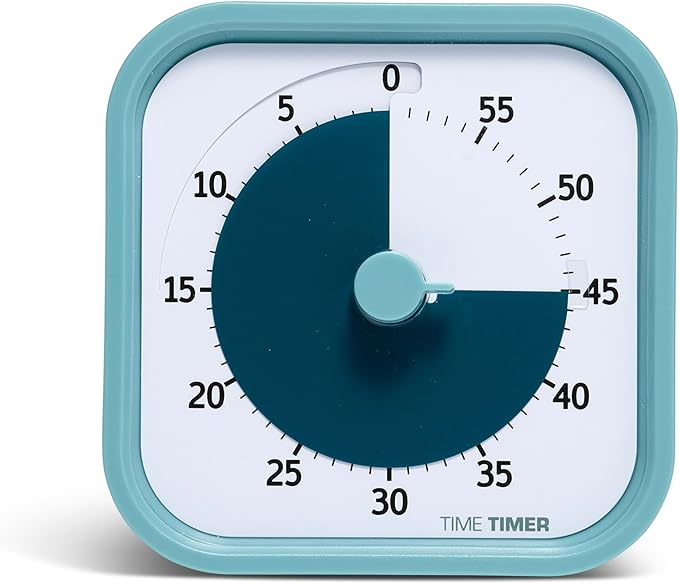
Use a visual timer so your child can see how much time is left. It takes the nagging out of the equation entirely.
Step 4: Break Every Assignment Into Tiny Steps
“Do your homework” is too vague for an ADHD brain. CHADD’s research-based approach recommends breaking every assignment into small, concrete steps:
Instead of: “Do your math homework”
Try: “Do problems 1 through 5. Then take a break. Then do 6 through 10.”
Instead of: “Write your book report”
Try: “First, write down three things you remember about the book. That is step one.”
Use a checklist so your child can physically cross off each step. That dopamine hit from checking a box is real motivation for the ADHD brain.
Step 5: Add Movement to Homework Time
Sitting still and focusing is incredibly hard for kids with ADHD. Brightline recommends being flexible — a standing desk, yoga ball chair, wobble cushion, or even doing spelling words while bouncing on a trampoline all count as doing homework.

Step 6: Use Positive Reinforcement, Not Punishment
CHADD emphasizes that children with ADHD are often only noticed for problem behavior or failure. Positive reinforcement is essential because ADHD brains are motivation-driven — external rewards help bridge the gap until internal motivation develops.
Try a simple reward system:
- Finish homework before dinner? Pick what we have for dessert.
- Complete a full week of homework without a meltdown? Friday movie night with a special snack.
- The reward does not need to be big — it needs to be immediate and specific.
Step 7: Communicate With Teachers
You are not in this alone. ADDitude Magazine lists homework accommodations that should be part of your child’s 504 plan or IEP:
- Reduced homework load (fewer problems, shorter assignments)
- Extended deadlines for projects
- An extra set of textbooks at home
- Written instructions alongside verbal ones
- Breaking long assignments into smaller segments with separate deadlines
- Option to type assignments instead of handwriting
If your child does not have a 504 plan yet, check out our guide on how to discipline a child with ADHD without yelling for more strategies that work alongside school accommodations.
What If My Child Refuses to Do Homework at All?
First, take a breath. Refusal is usually not defiance — it is overwhelm. The ADHD brain’s threat-detection system is firing, and they are in fight-or-flight mode about a worksheet.
Try these approaches:
- Start with the easiest task: Build momentum with a quick win before tackling the harder stuff
- Sit with them (but do not do it for them): Your calm presence helps regulate their nervous system
- Use “body doubling”: Just being in the room doing your own work (paying bills, reading) while they do homework can help them stay focused
- Reduce the demand: “Can you do just the first two problems?” is better than a standoff over the entire assignment
- Talk to the teacher: If homework is consistently taking much longer than it should, the workload may need to be adjusted
A Ready-to-Use ADHD Homework Routine
- Snack + 20 minutes of free play or decompression
- Unpack backpack, put homework folder on the table
4:00 PM — Homework prep
- Review assignments together: “What do you have today?”
- Break assignments into a checklist of small steps
- Set up the homework station with all supplies
4:10 PM — Sprint 1
- Set visual timer for 15 minutes
- Start with the easiest assignment for a quick win
4:25 PM — Break
- 5 minutes: movement, snack, stretch
4:30 PM — Sprint 2
- Timer for 15 minutes, tackle the next assignment
4:45 PM — Break + check-in
- Review what is done, celebrate progress
- If more work remains, do one more sprint
5:00 PM — Done (or close to it)
- Pack finished homework back in folder
- Reward time: free play, screen time, whatever motivates your child
Adjust the times based on your child’s school schedule and energy levels. The structure matters more than the exact times.
You Are Not a Bad Parent for Hating Homework
Can I be honest? Most of us dread homework time as much as our kids do. And that is okay. You are not supposed to be a teacher — you are supposed to be their safe person.
Your job is not to make homework painless (it might always be hard). Your job is to build a system that makes it manageable and to stay calm enough that your relationship with your child survives the math worksheet.
Pick one strategy from this post. Try it for a week. If it works, add another. You do not have to overhaul everything today.
For more ADHD parenting strategies, check out our posts on how to discipline a child with ADHD without yelling and ADHD bedtime battles: how to get your child to sleep.
As an Amazon Associate, I earn from qualifying purchases. See our full affiliate disclosure.
Frequently Asked Questions
How long should homework take for a child with ADHD?
The general guideline is 10 minutes per grade level (so 30 minutes for a 3rd grader). However, kids with ADHD often take 2-3 times longer. If homework consistently takes much longer than expected, talk to the teacher about reducing the workload or getting a 504 accommodation.
Should I sit with my ADHD child during homework?
For younger kids, yes — your calm presence helps regulate their nervous system and keeps them on track. As they get older, gradually transition to “body doubling” — being in the same room doing your own work rather than actively helping. The goal is building independence over time.
Is it okay to let my ADHD child take breaks during homework?
Absolutely. Timed breaks are essential, not optional. The sprint-and-break method (15 minutes on, 5 off) is one of the most effective homework strategies for ADHD kids. Movement breaks are especially important — they reset the brain’s ability to focus.
What accommodations can I request for ADHD homework?
Through a 504 plan or IEP, you can request reduced homework loads, extended deadlines, permission to type instead of handwrite, an extra set of textbooks at home, and breaking long projects into smaller segments with separate due dates.
Why does my child with ADHD do great at school but refuse homework?
Because school provides external structure (teacher, routine, social pressure) that homework does not. By the end of the school day, their executive function resources are depleted. It is not that they will not — it is that their brain genuinely cannot access the same level of focus at home in the evening.
Medical Disclaimer: This content is for informational purposes only and should not be considered medical advice. Always consult your child’s pediatrician or healthcare provider before making changes to treatment plans. Read our full disclaimer.