
Affiliate Disclosure: This post contains affiliate links. If you purchase something through my links, I may earn a small commission at no extra cost to you. I only recommend products I genuinely believe in. Read my full affiliate disclosure here.
This post is for informational purposes only and does not constitute medical advice. Always consult your child’s pediatrician, therapist, or ADHD specialist before making changes to your child’s routine or treatment plan. Read my full disclaimer here.
TL;DR: ADHD Morning Routines That Actually Work
- Start the night before — lay out clothes, pack the backpack, prep breakfast
- Use a visual schedule with pictures, not just words
- Add a visual timer (like the Time Timer MOD) to fight time blindness
- Give 5-minute countdowns before every transition
- Build in movement and brain-friendly breakfasts
- Skip the screen time until everyone is out the door
- Praise what goes right — not just what goes wrong
You know that feeling when you’ve said “put your shoes on” twelve times and your kid is still standing in the kitchen in their pajamas, holding a Lego piece, staring at nothing?
That’s not defiance. That’s ADHD.
And I say that as a mom who has lived those mornings. The ones that end in tears (mine), slammed doors, and rushing out the door still holding your coffee cup while your kid can’t find one sock.
The good news? There is a better way. It takes some planning, some trial and error, and honestly — starting the night before. But once you build the right morning routine for your ADHD child, mornings can go from survival mode to something that almost feels manageable.
This is everything I’ve learned, plus what the experts at Child Mind Institute, ADDitude Magazine, and other ADHD resources recommend. Let’s get into it.

Why Are Mornings So Hard for Kids with ADHD?
Before we fix the morning, it helps to understand why it’s broken.
Kids with ADHD have brains that are under-stimulated in the areas responsible for planning, organizing, sequencing, and working memory — all things that getting ready for school requires, like, every single step. According to ADDitude Magazine, caregivers need to reinforce these skills much longer than they would for neurotypical children.
Add in time blindness — a very real ADHD trait where your child genuinely cannot feel time passing — and you get a kid who thinks they have plenty of time, then is suddenly shocked that the bus is here.
What Is Time Blindness in Kids with ADHD?
Time blindness means your child’s brain doesn’t have a reliable internal clock. They can’t “feel” that 20 minutes have passed. They can’t estimate how long it takes to brush teeth. Dr. Sharon Saline, a clinical psychologist specializing in ADHD, explains that kids with ADHD operate on a “Now / Not Now” internal clock — if something isn’t happening right this second, it basically doesn’t exist.
That’s why yelling “we leave in 10 minutes!” doesn’t work. Ten minutes means nothing. But a visual timer that they can see counting down? That works.
The fix for time blindness: make time visible.
Step 1: Build Your Morning the Night Before
The single biggest thing you can do for ADHD mornings is reduce the number of decisions your child has to make in the morning.
Every decision is a cognitive load. And for a brain with ADHD, cognitive load stacks up fast. Do this the night before:
- Lay out a complete outfit — shirt, pants, socks, underwear, shoes
- Pack the backpack — homework, folders, lunch box
- Prep breakfast — set out a bowl and cereal, or pre-make overnight oats
- Set everything by the door — backpack, shoes, jacket, any activity gear
- Review tomorrow’s schedule — any changes, special events, or permission slips
The Navigating ADHD blog recommends making a checklist of “night before tasks” and using a visual schedule to walk your child through each step. With repetition, they’ll start doing it independently.
Pro tip: An outfit organizer or hanging closet system (labeled by day of the week) takes the choice completely off the table. Your child grabs Monday’s bag, and the decision is made. See the product recommendations below!
Related: How to Create a Bedtime Routine for Kids with ADHD — because good mornings really do start the night before.
Step 2: Create a Visual Morning Schedule (Not Just a List)
Verbal instructions don’t stick for ADHD brains. That’s not rudeness or laziness — it’s a working memory issue. According to ADDitude Magazine, giving multi-step directions to a child with ADHD means they may only hear the first or last step.
A visual schedule solves this. It’s a step-by-step chart — with pictures — showing exactly what to do and in what order. Your child doesn’t have to remember anything. They just look at the chart.
What Should Be on a Visual Morning Schedule?
- Wake up / alarm goes off
- Use the bathroom
- Get dressed (clothes already laid out!)
- Eat breakfast
- Brush teeth
- Put on shoes & jacket
- Grab backpack
- Out the door
Keep it simple. Icons or pictures work better than words for younger kids. The Child Mind Institute recommends making schedules interactive — let your child check off or move a marker when each step is done. That dopamine hit from “completing” a step is gold for ADHD motivation.
Recommended Tool: Visual Routine Chart
A good visual schedule chart makes mornings self-directed. Look for one with customizable picture cards so you can build a routine specific to your family.
Visual Schedule Chart for Kids
Customizable picture cards, velcro-mounted for easy daily use. Perfect for ADHD, autism, and all visual learners.

Step 3: Use a Visual Timer to Fight Time Blindness
This is the game-changer tip I wish someone had told me years ago.
A regular clock does nothing for a child with ADHD. But a visual timer — one where your child can actually see a colored disk shrinking as time passes — makes time concrete and visible.
Research from the EF Specialists shows that having a visible clock dramatically improves time monitoring and prospective memory in kids with ADHD. When they can see time disappearing, they’re more likely to manage it effectively.
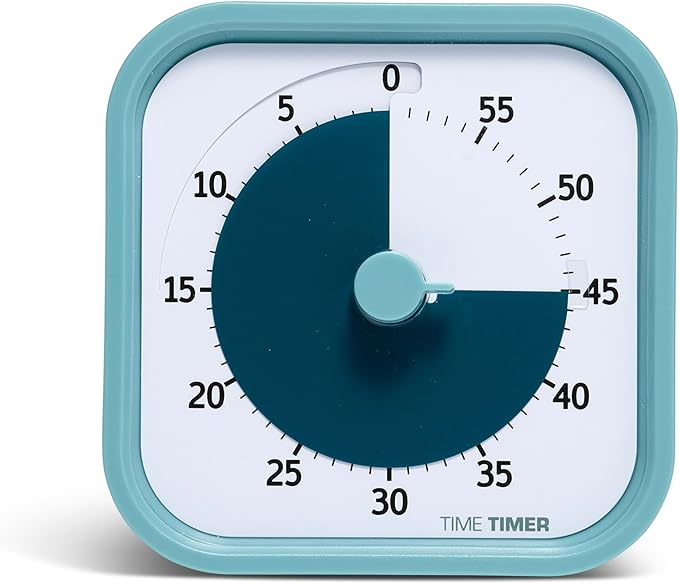
The Time Timer MOD is the gold standard. It has a big visual disk that shrinks as time runs out. No numbers to read, no digital display to ignore — just a visual cue that even young kids can understand.
Recommended Tool: Time Timer MOD
The visual timer trusted by occupational therapists, ADHD coaches, and classrooms everywhere. A shrinking red disk makes time visible so kids can understand how much is left.
Price: ~$20
Step 4: Give Transition Warnings (Not Surprises)
One of the biggest morning blowups happens at transitions: when it’s time to stop eating and get dressed, or stop playing and go out the door. For kids with ADHD, abrupt transitions feel like an attack on their nervous system.
The fix is simple: give countdowns.
The Child Mind Institute recommends giving a preview of the day every morning, then giving notice before each transition: “In 10 minutes, we’re putting on shoes. In 5 minutes. Now it’s time.”
A few more transition strategies that actually work:
- Use a “transition song” — assign a specific song that plays when it’s time to move to the next step. When they hear it, they know what’s coming.
- Make eye contact first — before giving any direction, get on their level, make eye contact, and wait for acknowledgment. Shouting from across the house doesn’t register.
- Use “what’s next?” questions — instead of giving commands, ask “What do you need to do next?” This activates the brain differently and builds independence over time.
- Give one instruction at a time — not “Go brush your teeth, then get your backpack, then put on your shoes.” Just “Go brush your teeth.” One thing at a time.
According to ADDitude Magazine, interactive checklists — where your child physically moves a marker or places a marble in a jar when they complete a step — are especially effective for making transitions feel rewarding.
Related: ADHD Discipline Strategies That Actually Work — because transitions aren’t just a morning problem.
Step 5: Set the Right Wake-Up Conditions
How your child wakes up sets the tone for everything. A jarring alarm going off in the dark triggers stress. But a gradual wake-up experience — with light, a gentle sound, and a visual cue about whether it’s actually time to get up — can make the whole morning feel different.
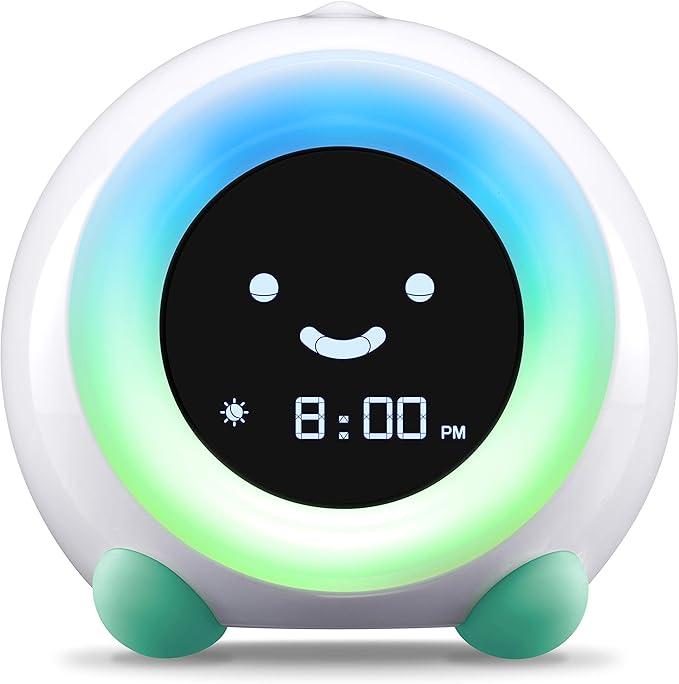
This is where an OK-to-wake clock earns its keep. The LittleHippo Mella is a favorite in the ADHD parenting community. It uses color to signal sleep time (red), wake time (green), and a “play quietly” window (yellow). No clock-reading required.
Recommended Tool: LittleHippo Mella OK-to-Wake Clock
Color-coded alarm clock that teaches kids when it’s sleep time (red), almost time (yellow), and GO time (green). Also functions as a night light and sound machine.
Price: ~$50
Step 6: Keep Distractions Out of the Morning
If screens are available in the morning, your ADHD child will get pulled in. That’s not a character flaw — it’s just how ADHD brains work. Highly stimulating things (like YouTube) will always beat low-stimulation tasks (like finding your left shoe).
The ADDitude Morning Routine guide strongly recommends keeping screens off entirely until everyone is out the door. You can even use screen time as the reward for getting out on time — “If we’re ready by 7:45, you can watch one video in the car.”
Other distractions to eliminate:
- Toys in the bathroom or kitchen
- Pets that need attention
- Siblings who are loud or fighting
- Too many clothing choices (set the outfit the night before!)

Step 7: End on Praise, Not Frustration
This one is the hardest when you’re running five minutes late and someone still can’t find their shoes. But how you end the morning matters.
The Child Mind Institute recommends praising good transitioning specifically and enthusiastically: “I really liked how you put your bowl in the sink right away and grabbed your backpack. That was awesome.”
When kids know what “right” looks like — when they feel what success feels like — they’re more likely to repeat it. Focus on the wins more than the losses. And on really hard days? Drop the expectations entirely and just get everyone out alive. You can reset tomorrow.
Recommended Tool: Kids Weekly Outfit Organizer
A hanging closet organizer with 5–7 compartments labeled by day of the week. Pre-load outfits on Sunday night and your child never has to make a clothing decision on a school morning again.
Kids 7-Day Outfit Planner Hanging Closet Organizer
Related: ADHD Homework Routines That Reduce Nightly Battles — because after school is its own survival game.
Sample ADHD Morning Routine Schedule
Here’s what a streamlined ADHD-friendly morning can look like, based on a 7:30am school start:
| Time | Task | Tool |
|---|---|---|
| 6:45am | Wake up (light + color cue) | Mella clock turns green |
| 6:47am | Bathroom: pee, wash face | 5-min visual timer |
| 6:52am | Get dressed (pre-laid outfit) | Outfit organizer |
| 7:00am | Eat breakfast | 15-min timer, no screens |
| 7:15am | Brush teeth | 2-min visual timer |
| 7:20am | Shoes, jacket, backpack | Visual checklist at door |
| 7:25am | Out the door! | Buffer time built in |
Adjust the times to fit your family. The key is consistency — run the same routine every single school morning so it becomes muscle memory.
What to Do When the Morning Still Falls Apart
Even with the best systems, there will be bad mornings. Here’s what helps:
- Have a “rescue kit” by the door: granola bar, spare hair tie, extra pencil — things that buy you 30 seconds and avoid a spiral
- Build in 10–15 minutes of buffer time: ADHD always takes longer than expected
- Don’t take the bait: if your child is melting down, stay calm. Your nervous system is contagious.
- Debrief later, not in the moment: if something went wrong, talk about it at dinner, not while you’re running out the door
- Celebrate small wins: if they got shoes on without being asked, that’s worth noting
The goal isn’t a perfect morning. The goal is a better morning. And with these systems in place, better is absolutely achievable.
Frequently Asked Questions About ADHD Morning Routines
How do I get my ADHD child to follow a morning routine?
Start by creating a visual schedule with pictures showing each step in order. Practice the routine together before school starts. Use a visual timer to make time concrete. Build in the night-before prep to reduce morning decisions. Consistency is the most important factor — run the same routine every day until it becomes automatic.
What is the best morning routine for a child with ADHD?
The best morning routine is one that starts the night before (with outfit prep and backpack packing), uses a visual step-by-step schedule, includes visual timers, minimizes distractions (no screens), and gives transition warnings at 10, 5, and 2 minutes. Sample schedule: 6:45am wake up → get dressed → breakfast → brush teeth → shoes and backpack → out the door by 7:25.
Why does my ADHD child always make us late?
Time blindness is a core ADHD trait. Kids with ADHD genuinely cannot feel time passing the way neurotypical brains can. They’re not being deliberately difficult — their brain doesn’t register that 10 minutes are almost up. The solution is making time visible with visual timers and giving frequent countdowns.
What tools help ADHD kids with morning routines?
The most effective tools are: a visual schedule chart with picture cards, a visual timer (like the Time Timer MOD), an OK-to-wake clock (like LittleHippo Mella), a weekly outfit organizer, and a checklist posted at eye level. These tools take the cognitive load off the child and make each step automatic.
Should I use rewards for morning routines with ADHD?
Yes! Rewards work very well for ADHD brains because they provide immediate, concrete motivation. A sticker chart, a marble jar, or earning screen time in the car for being ready on time are all effective strategies. The key is keeping the reward immediate and predictable.
At what age should a child with ADHD do their morning routine independently?
Independence varies widely for kids with ADHD. Most experts suggest gradually shifting responsibility as the child demonstrates mastery of each step — not by age, but by readiness. Even tweens and teens with ADHD may still need visual reminders and external accountability. That’s okay. Scaffold the support and fade it slowly.
You’ve got this, mama. ADHD mornings are hard, but they don’t have to be a daily war. Build the systems, give yourself grace on the rough days, and celebrate every single time it works — because it will work.
If this helped, save it to Pinterest, share it with another ADHD parent, or leave a comment below. I’d love to know what’s working in your house. ❤️
Sources: ADDitude Magazine – ADHD Morning Routine | Child Mind Institute – Helping Kids with Transitions | Dr. Sharon Saline – Time Blindness in ADHD | Navigating ADHD – Morning Routine Strategies | EF Specialists – Managing Time Blindness